|
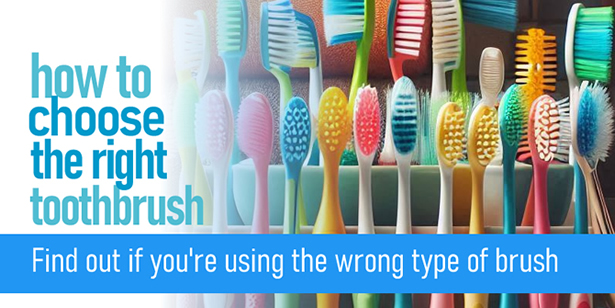
Are
you using the wrong toothbrush?
When it
comes to maintaining a healthy smile, choosing the right toothbrush
can make a big difference. With so many options available on the
market, it can be overwhelming to know which one to pick. But don't
worry, we've broken it down into five key tips to help you make
an informed decision. Whether you prefer a manual or electric toothbrush,
these tips will ensure you choose the best one for your oral hygiene
needs.
1. Consider the Bristle
Type: Soft vs. Hard
The most important factor to consider when choosing a toothbrush
is the type of bristles. The American Dental Association (ADA) recommends
using a toothbrush with soft bristles, as they are gentle on your
gums and enamel while still effectively cleaning your teeth. Hard
bristles may cause damage to your gums, lead to gum recession, or
wear down your enamel over time. If you're unsure, opt for a toothbrush
with medium or soft bristles to prevent unnecessary irritation and
keep your smile healthy.
Tip:
Always avoid overly stiff bristles unless advised by a dentist for
specific oral health conditions.
2.
Pick the Right Head Size
The size of the toothbrush head can also impact how thoroughly you
can clean your teeth. Ideally, you should choose a toothbrush with
a head that fits comfortably in your mouth. A smaller head allows
for better maneuverability, especially when reaching those tricky
back teeth. A standard size head is suitable for most adults, but
if you have a smaller mouth or find it hard to reach the back teeth,
a compact or mini-sized head may be more appropriate.
Tip:
Choose a toothbrush with a head that can easily reach all areas
of your mouth, including the hard-to-reach spots like the back molars.
3. Manual vs. Electric: Which Is Right for You?
Another important decision to make is whether to go with a manual
or electric toothbrush. While manual toothbrushes are affordable,
portable, and effective when used properly, electric toothbrushes
have been shown to provide a more consistent and thorough cleaning
due to their automatic brushing motion. They are especially beneficial
for people with limited dexterity or those who have difficulty brushing
for the full two minutes.
Electric
toothbrushes also often come with built-in timers and pressure sensors
that help you avoid brushing too hard or too long, making it easier
to maintain optimal oral hygiene. That said, if you prefer the simplicity
and cost-effectiveness of a manual toothbrush, it can still do a
great job when used correctly.
Tip:
If you’re willing to invest a little more for convenience and
enhanced cleaning, an electric toothbrush may be worth considering.
But if you prefer a manual option, ensure you follow the proper
brushing technique and brush for the full two minutes.
4. Check
for ADA Seal of Approval
When selecting a toothbrush, always look for the American Dental
Association (ADA) Seal of Acceptance on the packaging. This seal
indicates that the toothbrush has undergone rigorous testing for
safety and efficacy. Brushes that carry the ADA seal are proven
to be effective at cleaning your teeth without causing damage to
your gums or enamel.
The ADA’s
endorsement ensures that the product meets high standards for quality,
which can give you peace of mind knowing you’re using a reliable
toothbrush.
Tip:
If you're unsure which toothbrush to choose, look for one that carries
the ADA seal for guaranteed quality and performance.
5. Consider Special Features for Your Needs
Some toothbrushes come with additional features that may be beneficial
depending on your oral health needs. Here are a few features to
consider:
Tongue
Scrapers: Some toothbrushes have a built-in tongue scraper on the
back of the brush head, which can help remove bacteria and improve
overall breath freshness.
Grip and Handle: If you have arthritis or limited dexterity, look
for a toothbrush with a larger, ergonomic handle that provides a
comfortable grip.
Pressure Sensors: Electric toothbrushes with pressure sensors can
alert you when you're brushing too hard, which can prevent gum irritation
and enamel wear.
If you have specific oral health concerns (such as gum sensitivity,
braces, or teeth whitening), look for a toothbrush designed to address
those needs.
Tip:
Choose a toothbrush with features that cater to your personal oral
care routine and health requirements.
Selecting the right toothbrush is crucial for maintaining good oral
hygiene. By considering factors like bristle type, head size, manual
vs. electric options, ADA approval, and any special features, you
can make an informed choice that suits your needs. Remember to brush
twice a day, floss regularly, and visit your dentist for checkups
to keep your teeth in top shape.
Choosing
the right toothbrush is a simple but important step toward healthier
teeth and gums, so take the time to select one that’s perfect
for you!
|